
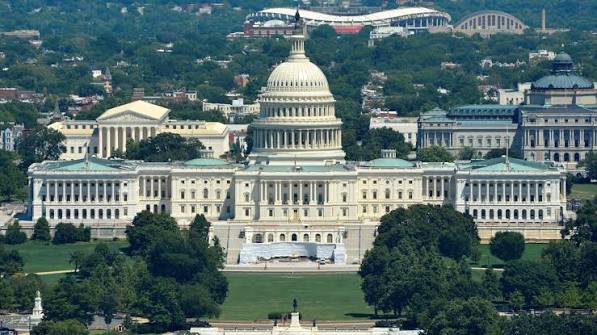
The Washington metro area lost 100,500 jobs between May 2025 and May 2026, and the sectors hit hardest, professional services, federal government and leisure and hospitality, overlap heavily with the customer base along Church Street and Maple Avenue.
The Metropolitan Council of Governments released the data on July 15, citing the Bureau of Labor Statistics. More than half the losses, 54,500 positions, were federal government jobs eliminated during the DOGE-driven workforce reduction. Another 32,100 came from the professional and business services sector, which includes the government contractors and consultants concentrated in Northern Virginia. Leisure and hospitality lost 7,500 positions regionwide.
Virginia absorbed the worst of it. The state shed 51,400 jobs over the same 12 months, ranking 48th out of 50 states for job growth at negative 1.2 percent, according to Bureau of Labor Statistics data analyzed by Cardinal News. Of those losses, 22,600 came from professional, scientific and technical services, a category heavy with federal contractors, and 20,110 were direct federal positions.
In Fairfax County, the number of unemployed residents reached 21,239 in May 2026, up 7.6 percent from a year earlier and 39 percent higher than the 15,275 recorded in December 2024, according to state workforce data reported by FFXnow. May marked the eighth consecutive month that fewer than 620,000 county residents were employed in the civilian workforce, down from an average of about 650,000 at the start of the second Trump administration.
"The big takeaway is that this is a continuation of the contraction in the federal workforce following the federal workers who took the deferred retirement package in October," George Mason University economist Keith Waters said in an April 2026 interview with WTOP. Waters warned that the weakness could bleed into commercial real estate and eventually local government budgets.
That warning carries weight in Vienna, where about 60 percent of the town's debt service payments are supported by meals tax revenue, according to figures presented at the Town Council's April 28 meeting. If fewer diners are spending on Church Street and Maple Avenue, the revenue stream backing Vienna's infrastructure bonds could soften.
The Town Council voted 5-2 on July 7 to pause plans for an aquatics and fitness center on the vacant Annex property and to debate whether to reduce the meals tax rate that was primarily intended to fund that facility.
Gov. Abigail Spanberger linked the federal cuts directly to consumer spending in a July 9 interview with The Washington Post, saying the cuts have "put families out of work and dampened consumer spending" and require "a long-term rebuild."
The University of Virginia's Weldon Cooper Center projects Virginia's economy will rebound to 1.6 percent growth in 2027 after a near-flat 0.3 percent in 2026.