
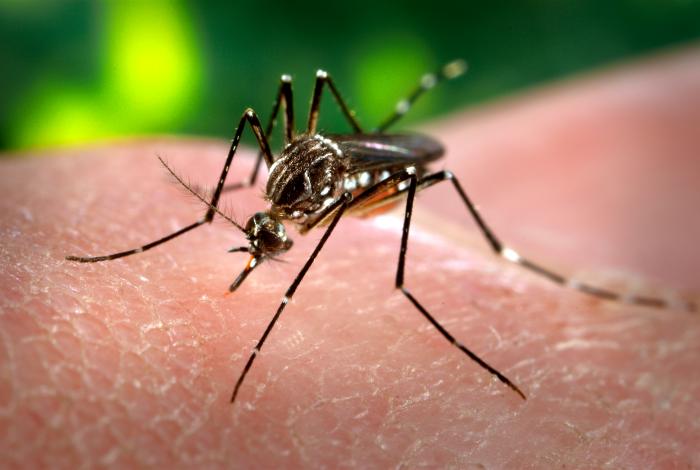
Fairfax County health officials are investigating after a Northern Virginia resident contracted dengue fever from a local mosquito bite, marking the first time the virus has been transmitted within Virginia's borders.
The Virginia Department of Health confirmed the case Tuesday, Aug. 4, in a clinician letter signed by State Health Commissioner Cameron Webb. The Fairfax County Health Department and Loudoun County Health Department are both working with VDH to investigate.
The patient had not traveled outside Virginia before becoming ill. Health officials believe an Aedes mosquito bit an infected international traveler, then bit the second resident, creating the state's first known local transmission chain. The infected traveler had been diagnosed with dengue about two weeks earlier.
VDH said there is no evidence of continued transmission and no additional locally acquired cases have been reported. The agency assessed the overall risk of contracting dengue in Virginia as remaining low.
What Fairfax County residents should know
Two days before the public announcement, on Sunday, Aug. 2, VDH alerted health care providers across the state, urging them to consider dengue testing for patients with fever, eye pain, muscle pain and joint pain, even without a travel history.
Dengue symptoms typically appear five to seven days after a mosquito bite and include high fever, severe headache, nausea, vomiting and rash. Most people recover within a week. About one in 20 infected people develop severe dengue, which can cause internal bleeding, shock and death.
How to reduce risk at home
The Aedes mosquito breeds in water-filled containers as small as a bottle cap. VDH urged residents to "tip and toss" any containers around homes and yards that hold standing water.
Additional prevention steps from VDH include:
- Using EPA-registered insect repellent
- Wearing long sleeves and pants during peak mosquito hours
- Installing or repairing screens on doors and windows
Why local transmission is rare
Most dengue cases in the United States are tied to international travel. While sporadic local transmission has been documented in Florida and Texas, it has remained rare in the mid-Atlantic region, according to the Washington Post. Globally, dengue has been increasing in recent years as climate conditions expand the range of Aedes mosquitoes.
VDH and the Fairfax County Health Department are conducting ongoing mosquito surveillance in the area. Residents with questions can contact VDH's vector-borne disease team at [email protected].