Fairfax County residents dealing with drought, extreme heat and flash flooding now have a state-funded research office in their backyard.
A provision in Virginia's two-year state budget, signed by Gov. Abigail Spanberger on June 29, authorized George Mason University to host the Virginia State Climate Office. The office, effective July 1, is anchored at GMU's Virginia Climate Center on the Fairfax campus at 4400 University Drive, minutes from downtown Vienna.
“Virginia was one of only two states in the nation without an operational state climate office. That gap left localities, farmers, and businesses without a central, no-cost source of climate information that most other states take for granted,” said Delegate David Reid of Loudoun County, who sponsored the budget amendment in the House establishing the State Climate Office at George Mason. “Hosting this office at George Mason puts proven scientists to work for every corner of the commonwealth, and we are committed to collaborating to ensure improved strategic planning, data collection and analysis, and avoided losses.”
The office will collect data and provide expertise on weather and climate-related risks to state and local government agencies, businesses, and communities across the commonwealth, according to the budget language. It will also serve as Virginia's liaison to national meteorological and climatological associations.
Local climate impacts
Fairfax County is in the middle of an ongoing drought. A heat wave canceled some Fourth of July events across the region, and a thunderstorm displaced multiple families in the Burke area after what officials described as a microburst with tornado-like impacts, according to FFXnow reporting.
The Virginia Climate Center's November 2025 climate assessment found the state is experiencing more extreme temperature swings, more intense precipitation, more frequent droughts and rising sea levels. In fact, droughts disrupting Potomac River water availability "could reduce the state's economic output by more than $4.5 billion in just one month."
That finding carries weight locally. The Potomac Interceptor collapsed in January, prompting Fairfax Water and other utilities to study alternative water sources beyond the Potomac.
Who's behind it
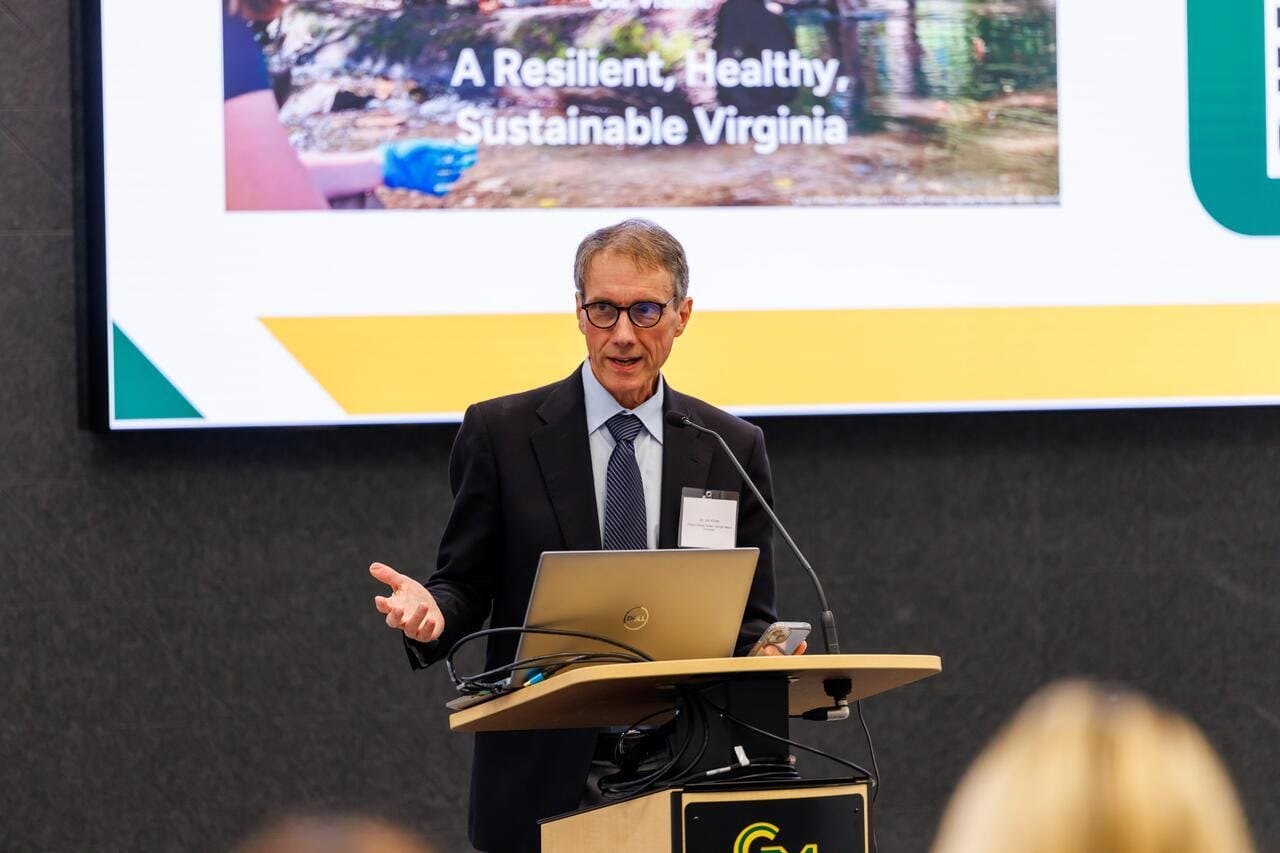
VCC Director James Kinter, a professor of climate dynamics who also leads Mason's Center for Ocean-Land-Atmosphere Studies, will head the office. "Every Virginian deserves access to reliable, localized climate information, whether they're a farmer on the Eastern Shore, an emergency manager in Southwest Virginia, or a family deciding where to buy a home," Kinter said.
State Sen. Stella Pekarsky (D-36), a GMU alumna whose district covers Centreville, Chantilly and Clifton in Fairfax County, championed the amendment in the Senate. Her 36th Senate district includes parts of western Fairfax County near Vienna.
“The office will ensure that Virginia has a seat at the national table to collaborate with groups like American Association of State Climatologists and play a vital role working with localities to ensure a brighter future for the next generation of families across the commonwealth and the nation,” added Senator Pekarsky.
The Virginia Climate Center launched in 2023 with approximately $2 million in NOAA funding secured by the late Rep. Gerry Connolly.
What comes next
The budget provision took effect after last-minute negotiations between Spanberger and the General Assembly. GMU's College of Science announced the designation in early July.
Current VCC projects already underway include flood modeling for the City of Fairfax, urban flood resilience work in Arlington County, and a Northern Virginia heat data collection campaign launching this summer.
.jpeg)