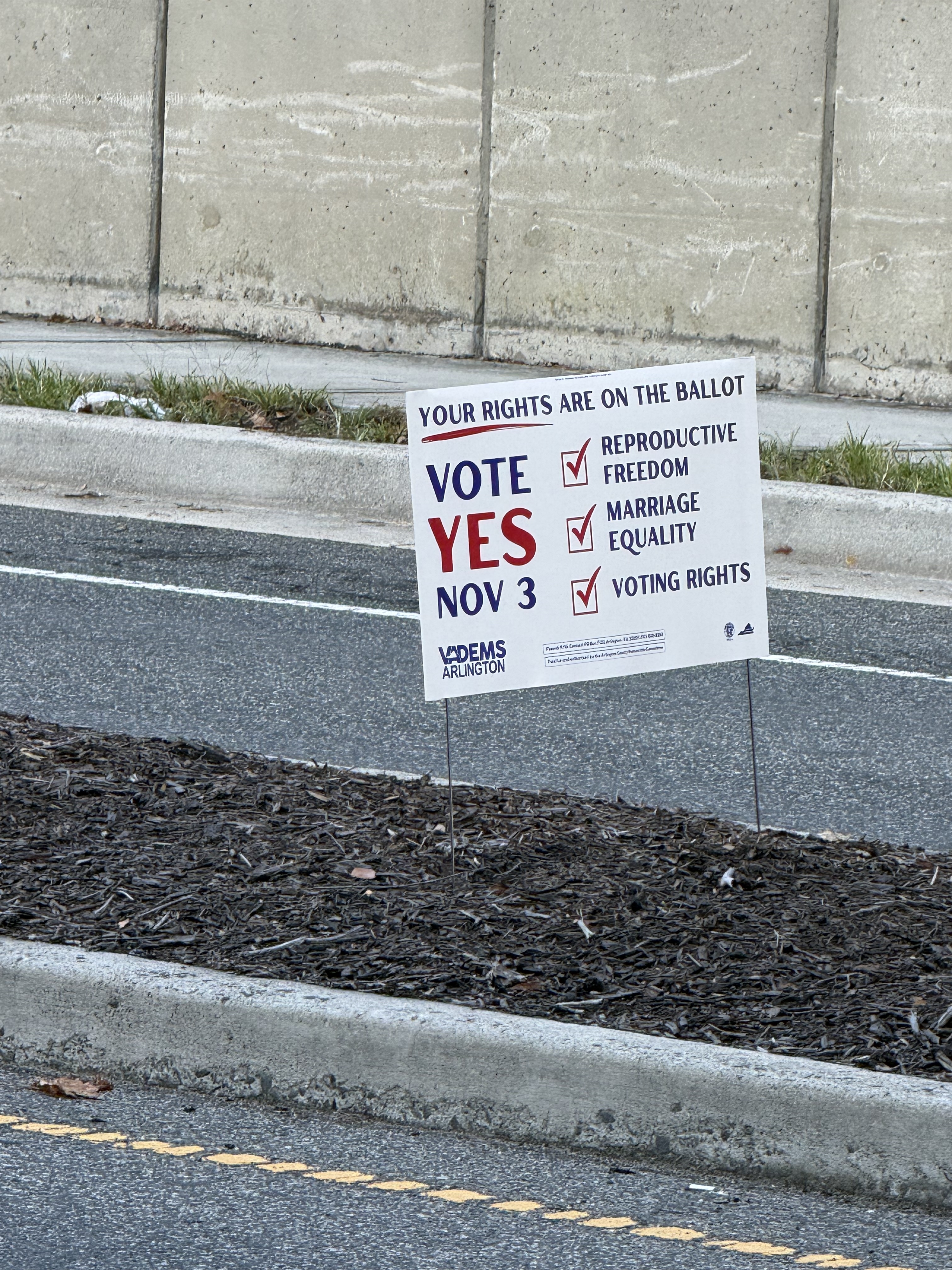
Virginia voters approved all three constitutional amendments on the Nov. 3 ballot, adding protections for reproductive freedom, same-sex marriage and voting rights to the state constitution, according to the Associated Press.
The amendments take effect Jan. 1, 2027, according to the Virginia Department of Elections, as Patch reported. Pending lawsuits could affect that timeline.
Question 1, protecting reproductive health care decisions including abortion, drew the widest margin. Over 61% of voters said yes, according to unofficial results from the Virginia Department of Elections reported by the Virginia Mercury. Question 2, removing the state's ban on same-sex marriage, passed with about 56% support. Question 3, automatically restoring voting rights to people released from incarceration for felony convictions, passed with about 55%.
All results are unofficial until certified by the state.
What the amendments do
Question 1 establishes reproductive freedom as a fundamental right in Virginia's Bill of Rights. It covers prenatal care, childbirth, postpartum care, contraception, abortion, miscarriage management and fertility care, according to WUSA9. The state can still regulate abortion during the third trimester but cannot prohibit it when a physician determines it is medically needed.
Abortion was already legal in Virginia. The amendment creates a constitutional standard against which future restrictions can be evaluated.
Sen. Jennifer Boysko, a Fairfax County Democrat who sponsored the amendment, told Cardinal News in August that her motivation stemmed from her experience with a rare form of preeclampsia during her second pregnancy.
Question 2 removes a 2006 ban on same-sex marriage from the Virginia Constitution and replaces it with language affirming that two adults may marry regardless of sex, gender or race. Same-sex marriage has been legal in Virginia since the U.S. Supreme Court's 2015 Obergefell v. Hodges decision, but the old ban language remained in the constitution. Advocates pushed to enshrine state-level protections after the court's 2022 Dobbs decision raised concerns about the durability of other federal precedents.
Question 3 makes voting rights restoration automatic for people released from incarceration. Virginia's constitution had stripped voting rights from anyone convicted of a felony unless the governor individually restored them. That process varied across administrations. Gov. Abigail Spanberger restored voting rights to more than 60,000 people this year, according to the Virginia Mercury.
Reactions
Spanberger said in a statement, as reported by FFXnow, that the state "remains the only state in the South that has not restricted women's reproductive freedoms since the Dobbs decision."
Han Jones, campaign manager for Virginians For Reproductive Freedom, said on election night, "Never again will our reproductive rights be a political football in Virginia," according to the Virginia Mercury.
Victoria Cobb, president of the Family Foundation of Virginia, said the fight was not over. "When the blue wave that swept up these amendments recede, voters will see what's been left in our Constitution," she said, according to Cardinal News.
Legal challenges ahead
A circuit court hearing is set for Nov. 13 on a lawsuit seeking to block certification of the reproductive rights amendment. The Founding Freedoms Law Center, the legal arm of the Family Foundation, argues the ballot language was misleading and that proper procedure for amending the constitution was not followed, according to the Virginia Mercury and VPM.
The same group filed a separate challenge to the marriage equality amendment on similar procedural grounds on behalf of a Prince William County pastor.
The Founding Freedoms Law Center does not intend to challenge the voting rights amendment.
Sen. Mamie Locke, a Hampton Democrat who sponsored the voting rights amendment in the state Senate for 15 years, said all three amendments were about expanding democracy. "It is giving people autonomy over what they do," she told Cardinal News on election night, "whether it is voting, whether it is whom they marry or as it relates to reproductive freedom."